Residential Proxies, Unlocking Hidden Prices and Regional Access
· based on the channel Lukas Margerie
Residential proxies are specialized proxy servers that route your internet requests through real home internet connections rather than data centers. This feature allows users to access content and pricing that is typically region-locked or hidden from standard IP addresses, making residential proxies essential for tasks like web scraping, price comparison, and bypassing geo-restrictions.
What Are Residential Proxies and How Do They Work
Residential proxies assign you an IP address from a real residential ISP, which websites recognize as a legitimate local user rather than a data center or VPN source. Unlike VPNs that route all traffic through a single server and often get flagged, residential proxies rotate IP addresses across many real homes, providing a fresh exit IP on each connection. This makes it much harder for websites to detect proxy usage and block requests.
This technology is especially useful for accessing region-specific prices or content, as many sites serve different information depending on the detected user location. For example, streaming services or SaaS providers like Spotify or Canva offer significantly different subscription rates across countries.
VPN vs Residential Proxy: Key Differences
VPNs and proxies are both tools for masking your IP address, but they operate differently:
- VPNs route all your traffic through a single data center IP, which can be flagged and blocked by websites.
- Residential proxies use IPs from real home internet connections, making them appear as legitimate local users.
- Residential proxies often rotate IPs for each request, improving anonymity and reducing the risk of bans.
Because of these traits, residential proxies are preferred for web scraping and accessing geo-targeted content where VPNs fall short.
Using Residential Proxies for Web Scraping and Price Comparison
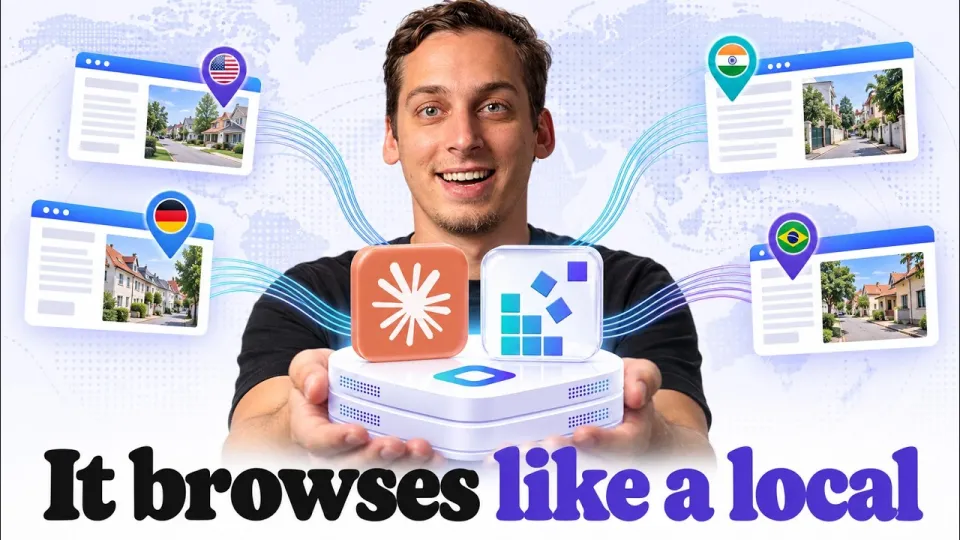
Web scraping with residential proxies enables gathering data from websites that restrict access by IP or show different prices based on location. In the example from the Claude Code agent developed by Lukas Margerie, residential proxies from DataImpulse were used to collect pricing data simultaneously from the US, Germany, Brazil, and India.
This automated agent used Playwright for browser automation and Claude Code AI to analyze pricing pages from real home IPs in multiple countries. The results revealed significant regional price differences for popular services such as Spotify, Canva Pro, ChatGPT, and Netflix.
Benefits of Rotating Residential Proxies
Rotating proxies change the IP address with every new connection or request. This offers several advantages:
- Prevents detection and blocking by websites that monitor IP usage.
- Enables large-scale data collection without triggering anti-bot defenses.
- Supports country targeting by selecting proxy IPs from specific regions.
For example, DataImpulse’s residential proxy network allows users to append country suffixes to usernames to target IPs from desired countries seamlessly.
Regional Pricing Insights from Residential Proxies
Using residential proxies to uncover regional pricing can inform SaaS companies and template sellers about market variations. The Claude Code agent’s findings showed that Spotify costs $12.99/month in the US but only about $1.45/month in India. Canva Pro’s annual subscription was $144 in the US but around $42 in India. These disparities highlight the importance of geo-targeted pricing strategies and competitive market analysis.
Common Questions About Residential Proxies
Many users wonder about the practical aspects of residential proxies, such as reliability, speed, and legality. Residential proxies are generally slower than data center proxies due to real ISP routing but offer better access and less risk of blocking. They are legal when used ethically, especially for legitimate data collection or personal privacy.
Useful Links
- DataImpulse Residential Proxies — Residential proxy network used for scraping and price comparison
- Claude Code — AI agent platform used to automate data extraction
- Playwright — Browser automation tool for web scraping
- Lukas Margerie’s Discord and Skool communities
Итог
Residential proxies offer a powerful solution for accessing hidden prices and geo-restricted content by routing requests through real home IP addresses. The Claude Code agent demonstrated how combining residential proxies from DataImpulse with AI and browser automation can reveal significant regional pricing differences across major SaaS platforms. For anyone involved in web scraping, price comparison, or regional marketing, investing in quality residential proxies is essential. Check out DataImpulse to get started with residential proxies and unlock new data opportunities.
This analysis is based on the insights shared by Lukas Margerie, whose expertise brings clarity to the practical use of residential proxies in 2026.
Key takeaways
- Residential proxies route requests through real home ISPs, avoiding data center IP blocks.
- Rotating residential proxies provide fresh exit IPs per connection for better anonymity.
- They enable geo-targeting to access country-specific pricing and content.
- Claude Code agent uses residential proxies to scrape pricing from US, Germany, Brazil, and India.
- DataImpulse offers a leading residential proxy network optimized for web scraping.
Questions & answers
What is the main advantage of residential proxies over VPNs?
Residential proxies use IP addresses from real home internet connections, making them appear as legitimate local users to websites. This reduces the chance of being flagged or blocked, unlike VPNs that route traffic through data center IPs often detected and restricted.
How do rotating residential proxies improve web scraping?
Rotating residential proxies assign a fresh exit IP address for each connection or request. This prevents websites from detecting repeated access from the same IP, helping avoid blocks and enabling large-scale data collection efficiently.
Can residential proxies help reveal regional pricing differences?
Yes, residential proxies allow accessing websites as if browsing from different countries. This capability enables users to see localized prices and offers, which often vary significantly between regions, providing valuable insights for market analysis.
Are residential proxies legal and safe to use for web scraping?
When used ethically and within the bounds of website terms of service, residential proxies are legal. They are generally safe, though users should ensure compliance with applicable laws and avoid scraping sensitive or restricted data.
Source: This Claude Code Agent Uses Residential Proxies to Find Hidden Prices · Markdown version